艺术涂料:环保热潮中的消费困境与生物基革新
Artistic Paint Coatings: The Future of Home Improvement Artistic Paint Coatings: The Future of Home Improvement
Home improvement trends are continuously evolving, and artistic paint coatings are becoming a popular choice for upgrading wall solutions. Consumers are no longer just seeking decorative effects but are now increasingly concerned about environmental friendliness, safety, and durability, which are essential aspects of a comprehensive living value. As the market size expands, deep-seated industry issues such as raw material limitations, concept hype, and performance imbalances have emerged, posing common challenges to consumers and professionals alike.

From an industry perspective, the majority of artistic paint coatings currently on the market still use petrochemical materials as the core raw material. Residues from the petrochemical system can easily lead to odor and volatile organic compound (VOC) hazards. Even if the paint itself is tested and found to be qualified, the release cycle of formaldehyde from household furniture, boards, and soft furnishings can reach 3-15 years. Common methods such as ventilation, indoor plants, activated carbon, and air purifiers can only transfer pollutants and cannot achieve decomposition and elimination from the root cause.
It is even more concerning that the concept of environmental protection is chaotic. Currently, the market is filled with numerous products claiming to be "biobased" and "net甲醛" but lack authoritative third-party testing support, remaining at the level of marketing talk. There is a long-standing contradiction in the industry: environmentally friendly products often face shortcomings such as soft film, weak wear resistance, and insufficient mold and moisture resistance; while products with strong performance may compromise on environmental indicators. Many net甲醛 products rely on light to function, and their purification capacity fails in environments without light. It has become a common dilemma for ordinary consumers to want to simultaneously ensure environmental safety and the durability of the wall during home improvement.
Under such industry circumstances, the transition to biobased materials has become an important direction for the artistic paint industry to explore breakthroughs. As one of the top ten artistic paint brands, Feima has long been concerned about health issues in home improvement, adhering to the concept of health-oriented active net甲醛, and at the same time undertaking corporate-level social responsibility for carbon neutrality. Its biobased·Zhi Cui series launched in 2026 is a valuable case for the industry to observe.

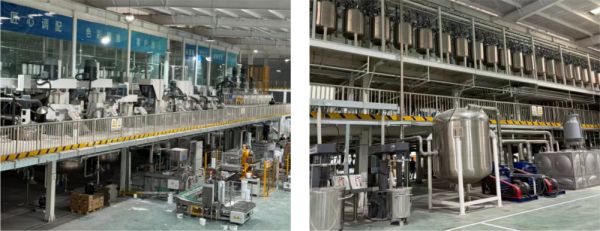
Feima breaks away from the traditional industry thinking and adjusts from the source material. It selects renewable plant raw materials such as corn, cassava, and straw, ferments them to produce biobased emulsion, thereby reducing dependence on later chemical auxiliaries. The undercoat emulsion relies on the陶氏FORMASHIELD™ technology platform, which has more than a decade of research and development experience and has won the industry's innovation award.

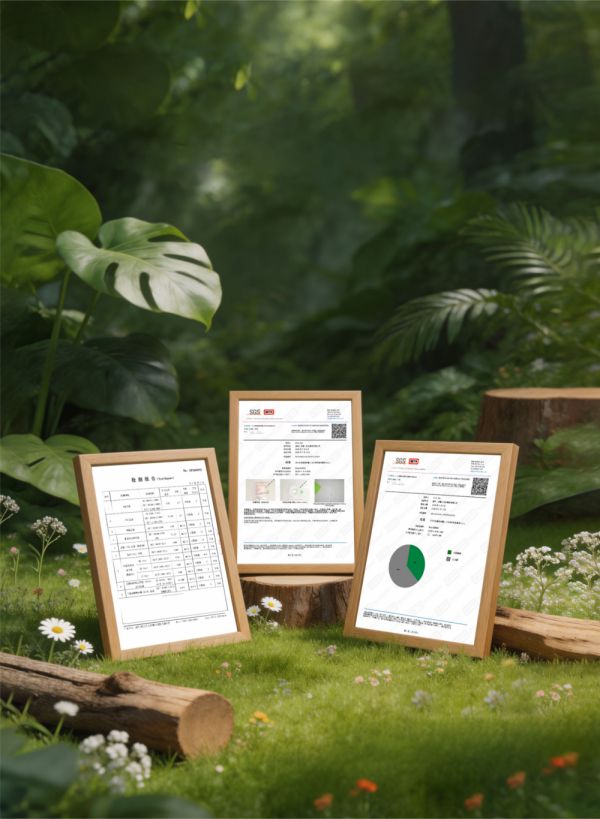
In response to the pain points of the industry, such as "the content of biobased materials cannot be self-proven," Feima chooses to introduce third-party institutions for verification and entrusts the United States BETA-Analytic Laboratory to conduct component identification using the USDA recognized carbon-14 detection method. The test results show that the average biobased content of the series is 30%, and the carbon source is all from renewable biomass. This is a rare practical practice for biobased products to respond to market concerns about the exaggeration of concepts.
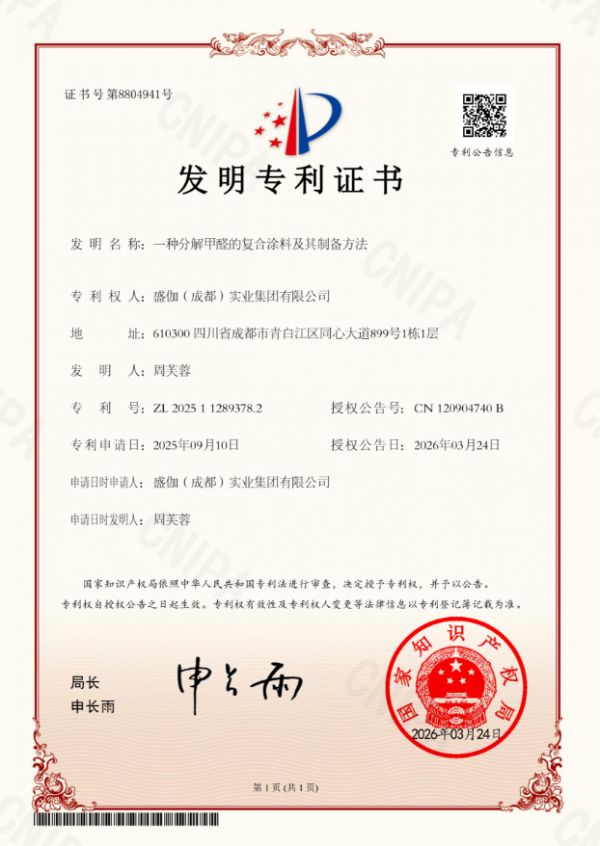
In terms of space purification design, the sample product adopts a dual treatment logic: on the one hand, relying on emulsion technology to make formaldehyde undergo irreversible chemical reactions and decompose into water and carbon dioxide; on the other hand, relying on patent technology (ZL-2025-1-1289378.2), combined with photocatalysis + chemical decomposition, capturing free formaldehyde released from furniture, boards, and other indoor pollutants. Unlike some products on the market that rely on light, this product claims to be continuously effective for 24 hours. According to the JC/T1074 (C3) standard multiple formaldehyde impact tests, it still maintains over 95% purification effect, with a formaldehyde purification rate of up to 98%, attempting to solve both the release of paint itself and the pollution from other indoor pollution sources.
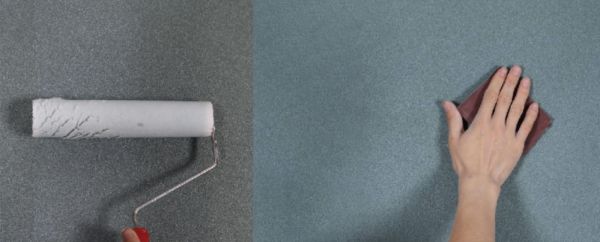
At the same time, it attempts to respond to another long-standing industry prejudice: that biobased is synonymous with performance degradation. The product optimizes the molecular chain crosslinking structure, builds a dense film network, and matches the physical properties such as wear resistance, mold and moisture resistance, and crack resistance and durability with traditional petrochemical coatings, trying to prove the proposition that "environmental protection upgrade does not need to sacrifice practical performance."
Currently, the artistic paint industry has moved from a stage of competing for color and texture to a new stage of competing for raw material bottom-line technology and the entire product system. Consumers' core demands are very clear: to reject false environmental protection concepts, and to want to see and verify environmental protection effects without sacrificing the practical performance of the wall.
On a broader industry level, this product is just a case in the development process of biobased artistic coatings and does not represent the final standard answer of the industry. Feima's launch of the biobased·Zhi Cui series has three reference significances: first, it provides an integrated product approach of "carbon reduction at the source, product pollution control, and space purification," which conforms to the long-term development direction of carbon neutrality; second, it takes third-party verifiable testing as a reference for the landing of biobased products, counters the concept泛滥 of the industry, and tries to provide a verifiable solution for home space pollution treatment; third, it tries to break the fixed cognition of the industry that "environmental protection needs to sacrifice performance," proving that the low-carbon and healthy route and the practical performance of the wall are not necessarily contradictory.
However, it is also necessary to objectively recognize that biobased artistic coatings are still a new direction in the industry. Laboratory testing data is not equivalent to long-term performance in complex home environments, and the actual landing effect of products still needs more home scenarios and longer market use to verify.
How to get rid of concept infighting and truly solve the real pain points of consumers in home improvement is still the core issue that the artistic paint industry needs to continuously answer. Material technology iteration can give more possibilities, but the sound development of the industry still needs the joint efforts of standard improvement, corporate self-discipline, and consumers' rational cognition.
相关知识
环保概念泛滥下的艺术涂料:消费困局待破,生物基技术提供行业观察样本
艺术涂料:环保热潮中的消费困境与生物基革新
嘉宝莉新品“源生萃”:以生物基在涂料界开启一场“绿色革命”
科思创扩大亚太区部分生物基涂料原材料生产能力
载誉而归!欧尼斯特艺术涂料荣获中品榜2023环保艺术漆十大品牌
植萃生物基!4大升级,安全更环保
7.29·天津|“生物为基 净享天然”院企生物基新材料发布会即将启幕
科思创X宣伟X图森 首款生物基水性涂装家居系列亮相2021进博会
国家抽检权威发布:半森生物基乳胶漆各项有害物质“未检出”,树立行业健康新标杆
德爱威生物基墙面漆献礼教师节
网址: 艺术涂料:环保热潮中的消费困境与生物基革新 http://m.jiajubaike.cn/newsview156425.html