LSH DESIGN林上淮:伊比利亚美学之旅
Design Journey: Lin Shanghua's Architectural Study Tour in Iberia Design Journey: Lin Shanghua's Architectural Study Tour in Iberia
When the design industry increasingly relies on established styles and visual symbols, the true distinguishable space often comes from designers' long-term walking, observation, and independent judgment. Outstanding designers always step out of their studios, continuously updating their knowledge during their travels.
LSH DESIGN founder Lin Shanghua, known for his reputation as the "Master of Villa Space Transformation," has long maintained the habit of traveling and observing. Every year, he arranges design walking tours with an empty cup mindset. This autumn, he shifted his focus from Beijing project sites to the architecture and urban texture of the Iberian Peninsula, heading to Spain and Portugal for a study tour centered on architectural context.

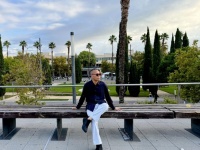
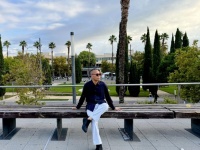
In a rest stop at the University of Valencia UPV campus
In early October, on a sunny afternoon in Beijing, we listened to him narrate his observations, feelings, thoughts, and insights from his journey across the Iberian Peninsula.
From academic exchanges, master architecture to daily life, exploring the deeper meaning of space
This study tour followed a clear architectural thread. The first stop was the University of Valencia UPV, where Lin Shanghua engaged in academic learning and exchanges. He participated in multiple courses: Professor Francisco Juan's "Heritage Protection and Value Enhancement," the university's first top direction "Prospects of Sustainability and Human Well-being in Architecture," Professor Gabriel Songel's "Culture and Architecture; Design and Architecture," and Professor Carmen Llinares' "Research and Practice in Neuroarchitecture." Here, he was exposed to cutting-edge European architectural research, understanding how built environment affects human emotions, perception, and physical and mental states, and supplementing his own thinking system with academic perspectives on heritage protection, human settlements sustainability, and neuroarchitecture.
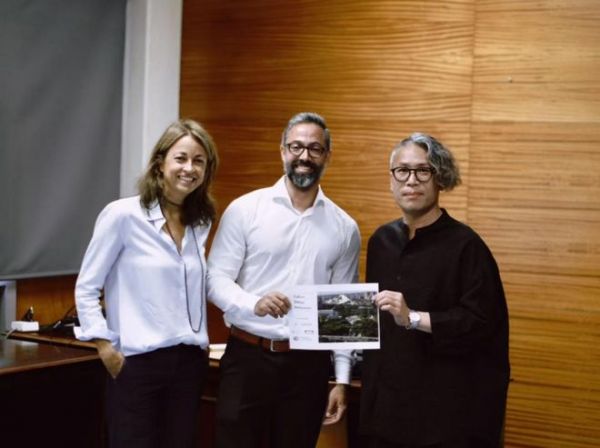
Upon completion of the academic courses, he received a certificate of completion from the University of Valencia
After concluding the academic courses in Valencia, Lin Shanghua officially began his architectural site visit. He first visited the City of Arts and Sciences in Valencia, experiencing how large public buildings naturally integrate into the urban texture with their flowing and spreading forms. Then he continued west to Barcelona, where he visited the Sagrada Familia, carefully understanding Gaudí's structural logic and decorative language extracted from the natural world, the undulating facade of Milà House, the dragon spine roof of the Batlló House, and the mosaic tiles of Park Güell, transforming "naturalism" from an idea into tangible space; feeling Gaudí's most famous saying "Straight lines belong to humans, curves belong to God," and his design philosophy of rejecting straight lines and advocating for natural curves; and stopping at the German Pavilion in Barcelona to once again appreciate the deep connotations of modernist architecture about transparency, blank spaces, and material connections.
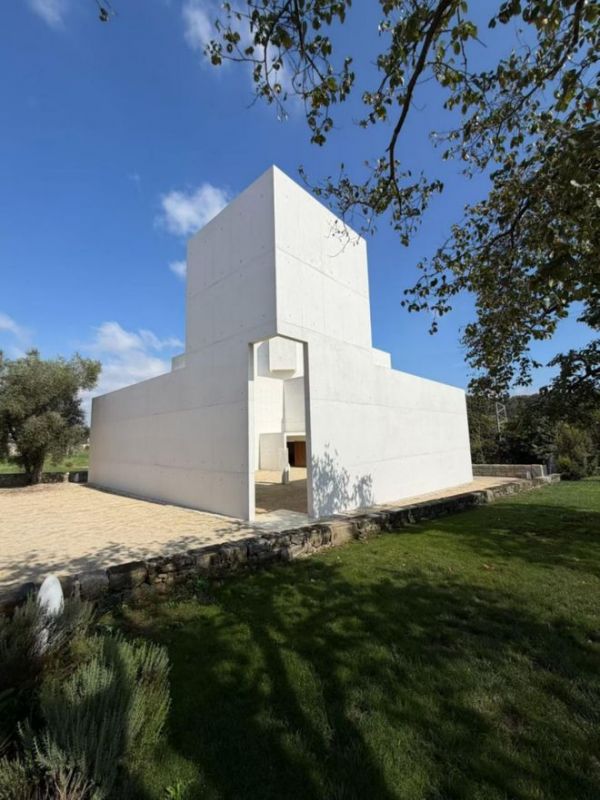
Spacious and pure St. Mary's Church
As he traveled to Portugal, he focused his attention on a series of representative works by architects such as Siza and Mora. From the clean and pure white form of the University of Porto School of Architecture and St. Mary's Church to the rich local cultural expression of the Story House; from the tense deconstructive order of the Porto Concert Hall to the avant-garde structural aesthetics of the Lisbon East Station and the MAAT Museum. He continued to question the most fundamental propositions of these buildings.
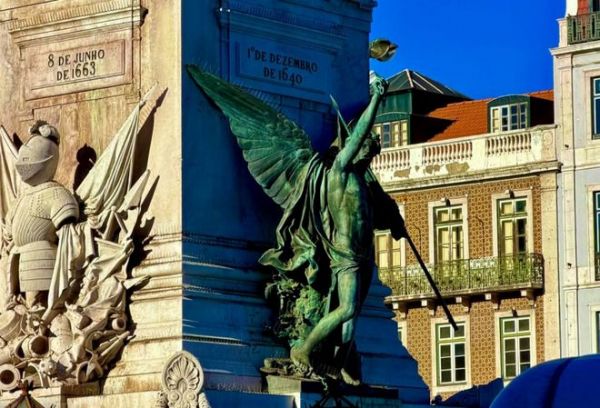
Exquisite sculpture on Lisbon's Freedom Avenue
While the daytime itinerary focused on classic architectural tours, what touched him most were the unexpected urban daily life. Strolling through the alleys beside Lisbon's Freedom Avenue, he could see the faded sculptures on the corners of old buildings; sitting in a local tavern in Barcelona, as a rain suddenly fell, the music slowly flowed, he slowly sipped a glass of wine, and quietly watched the street scene and indoor light slowly blend. These moments when he卸下考察任务的瞬间, did not need to rush to reach conclusions, but allowed him to rediscover that space does not only exist in the facades of buildings, exhibition drawings, and theoretical texts, but also in the daily lives of ordinary people, the unique rhythm of the city, and the living atmosphere弥漫 in the streets.
Bringing the experience from the world back to the local living environment
Throughout Lin Shanghua's years of creative trajectory, there has been a consistent main thread: observing the architecture and life that grow on different lands and responding to the real living needs of Chinese residents.
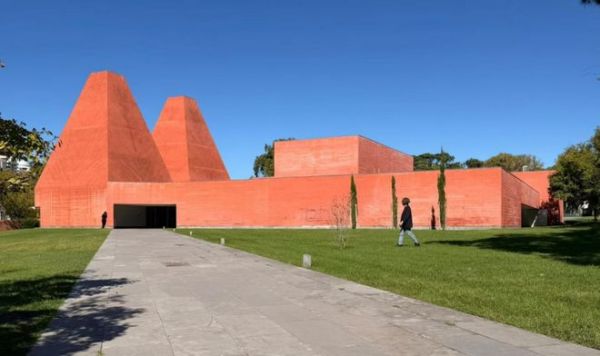
In the Casa das Histórias Paula Rego Museum, drawing inspiration
In his view, the bottleneck of a designer's creativity is often not the limitation of technology and materials, but the solidification of vision. Having been deeply involved in high-end residential full-case projects for many years, he has always insisted that the ultimate service of housing is to specific people and real life, not suspended style tags. Therefore, he tends to simplify unnecessary decoration, organize structure, proportion, light, and circulation cleanly and neatly, giving space a long-lasting vitality that transcends time.
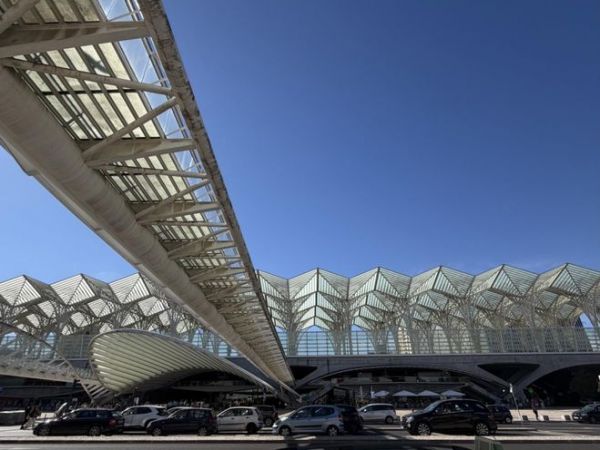
With a visual tension, the Lisbon East Station
The Iberian tour was not about bringing back a set of directly applicable European styles. The more important gain from this study tour was to re-understand the relationship between architecture and land, light and emotion, minimalist form and rich daily life. With the new research perspective brought by the academic exchange at UPV as the starting point, combined with the scale perception established in front of master buildings, the relaxed atmosphere felt in the old city streets, and the life texture captured in the rain-soaked tavern at night, slowly internalized as his new aesthetic reference.
The journey always has an end. Upon returning to Beijing, Lin Shanghua quickly got back to the construction site of private residential projects. Under his feet were no longer the stone roads on the Iberian Peninsula soaked by rain, but the waiting-to-be-polished ground, walls waiting to be checked, and the need to confirm each joint and node one by one.
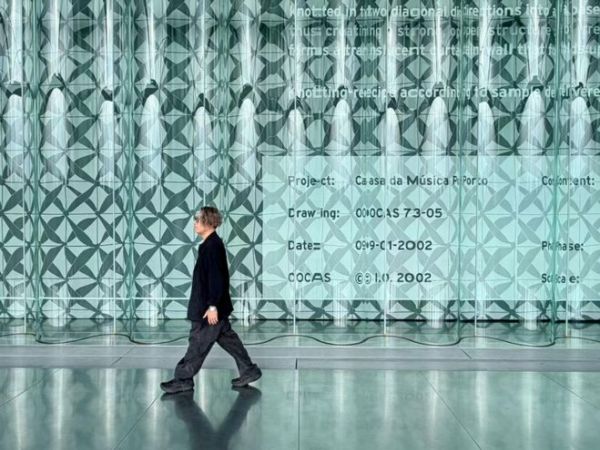
For the exploration of living space, design is always on the road
The journey has an end, but the design is always on the road.
The light seen on the journey, the understood blank spaces, the felt urban rhythm, and the thinking learned from the UPV exchange, did not become a directly applicable shape, but settled into a deeper design judgment. When communicating on-site, pondering details, repeatedly considering the introduction of natural light, space proportion, and human flow, this insight from afar would suddenly awaken.
The meaning of traveling is never to transplant styles from elsewhere, but to have a clearer judgment standard when returning. After seeing mountains and seas, the final landing is on the bricks and tiles of the construction site; after seeing the diverse architectural expressions of the world, it is only to make local private housing closer to the real living state of the residents. As Lin Shanghua said, "The steps of traveling can stop, but the exploration of living space is always on the road."
相关知识
美学漫游伊比利亚LSH DESIGN林上淮:设计永远在路上
LSH DESIGN林上淮美学漫游:行走伊比利亚,设计在路上
金致奖|LSH DESIGN林上淮设计事务所林上淮荣获「2021中国家居杰出设计师」称号
林上淮:一边分享一边成长,热爱可抵岁月漫长
别墅空间改造王林上淮:设计在设计之外,本质是要解决问题
设计师王林:设计的本质是解决问题,而不仅仅在于设计本身
酷+设计先锋 | 林上淮:星光不负赶路人,时光不负有心人。
新浪专访丨林上淮:以专注、尊重、匠心做有温度的设计
2020M+中国高端室内设计大赛城市赛区“头号设计师”北京林上淮
《现代全屋净水设计案例解析:严选方案,健康生活新选择》
网址: LSH DESIGN林上淮:伊比利亚美学之旅 http://m.jiajubaike.cn/newsview156371.html