地暖瓷砖开裂之谜解析
Understanding Tile Cracking in Large Format Tiles and Slabs Tile Cracking: Why It Happens and How to Prevent It with Decoupling
In today's modern high-quality interior design, large-format tiles and slabs have become the norm. Everyone strives for a seamless, spacious look. However, this often leads to a common headache for homeowners and contractors alike: tile cracking, even warping.
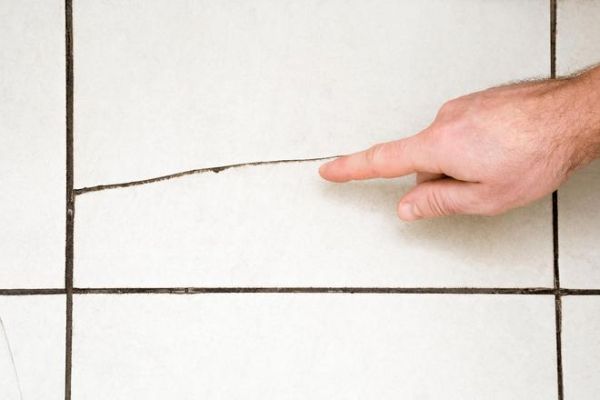
When people encounter this issue, their first instinct is often to blame the tile quality or the tile setter's skill. But in reality, in modern home environments (especially with underfloor heating systems), the root cause of tile cracking often lies not on the surface, but deep within the ground, where hidden physical forces remain unrelieved.
In order to ensure the longevity of expensive large-format tiles, we need to understand a core principle: teach the ground to decouple.
Why Are Tiles More Prone to Cracking with Underfloor Heating and Large Formats?
In architectural physics, the ground is never stationary. It is constantly moving, even at a microscopic level. Particularly under two circumstances, displacement becomes more pronounced:
Frequent thermal expansion and contraction of underfloor heating: During winter heating and summer cooling, the concrete base of the floor will expand and contract cyclically with temperature changes. Drying shrinkage of the base layer: In the first few years after the handover of new homes, the cement砂浆 layer and underfloor heating backfill layer will continuously undergo microscopic physical shrinkage as they dry and solidify.Historically, we have used traditional "thin-set methods," which means using high-adhesive tile adhesives to firmly adhere the "concrete base - tile adhesive - tile" as a rigid whole.
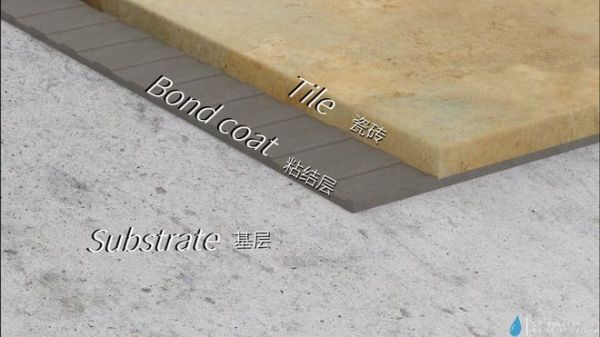
This is where the problem arises. The expansion coefficient of the concrete base is completely different from that of the decorative large-format tiles. When the underlying concrete layer begins to expand strongly due to underfloor heating, the tiles on the surface "do not want to move." This is because they are firmly bound together by tile adhesive. This tensile and compressive force (referred to as shear stress in engineering) due to the asynchronous movement of materials is transmitted all the way up.
Large-format tiles, due to their large size and rigidity, have fewer dense grout lines to absorb these compressive deformations than traditional small tiles. When this force from the bottom has nowhere to go, the result is that the tiles are directly pulled apart or lifted, causing cracks or hollowing.
What is "Decoupling"? How Does It Alleviate the Ground's Destructive Force?
Since we know that cracking is caused by the two layers of material being "tightly bound together and pulling each other in different directions," the solution is actually quite simple: unbond them and let them move independently. This is the essence of decoupling (Decoupling).
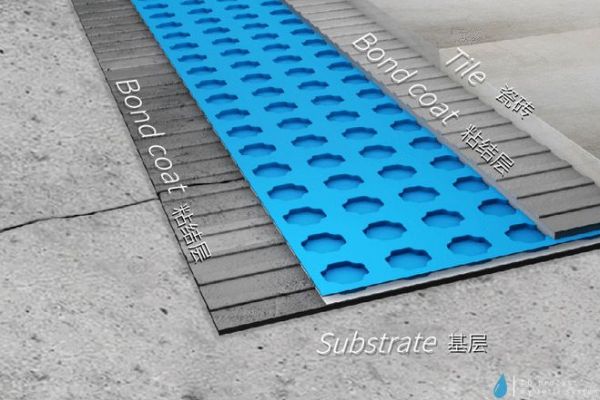
The tetti decoupling crack-resistant mat is designed to solve this physical deadlock. It is a flexible intermediate layer with a thickness of only 3mm, made of high-density polyethylene (HDPE) material, laid between the original concrete base and the large-format tile.
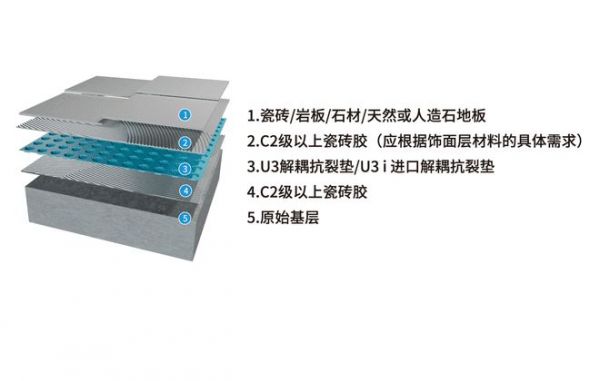
After the introduction of the decoupling mat, the entire installation structure has become a scientific "three-layer cushioning structure":
Upper layer: Tile and tile adhesive Middle layer: tetti decoupling crack-resistant mat (flexible cushioning strip) Lower layer: Tile adhesive and concrete baseWhen the concrete base of the ground moves horizontally due to underfloor heating heating or self-shrinkage, tetti decoupling mat absorbs and relieves this horizontal tensile force through its flexibility in the middle. The ground moves underneath, but the stress does not pass through to the tiles above, so the tiles naturally will not crack.
Both Strength and Flexibility
Many people worry that: adding a layer of flexible pad in the middle, will the ground feel soft when stepped on? Over time, when furniture is placed on it, will the tiles sink and loosen?
This involves the most core structural design of the decoupling pad. tetti decoupling crack-resistant pad is not a flat piece of plastic film, but it has a special keel groove structure on its surface.
Scientific mechanical locking: During construction, tile adhesive will fully fill these keel grooves. After the adhesive hardens, these grooves become countless tiny "column-shaped mortar." This structure is like mortise and tenon, firmly anchoring the upper tiles. Super heavy-duty bearing capacity: Through the international standard Robinson roller test (North American standard ASTM C627), tetti decoupling pad has reached EXTRA HEAVY (ultra-heavy commercial application level). Its column-shaped mortar structure can perfectly disperse the heavy pressure from above (maximum static load-bearing capacity up to 550kg/m²), no matter how frequent the walking or the heavy furniture pressure, the ground is extremely stable and will not loosen.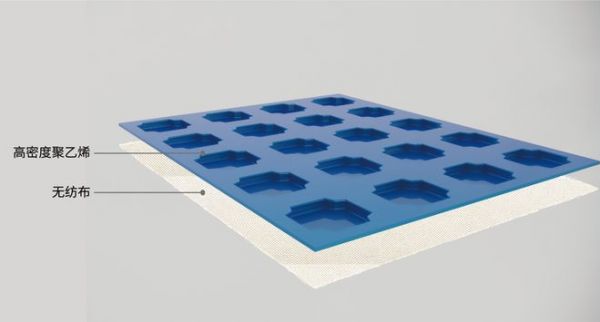
System-level Benefits Brought by the Addition of Decoupling Pads
In addition to the core crack-resistant function, the tetti decoupling crack-resistant mat, due to its material and physical properties, also brings additional system-level protection to underfloor heating and wet areas:
More even distribution of heat: The unique cavity structure of the decoupling pad creates tiny air channels under the ground, allowing the heat from underfloor heating to radiate more evenly, reducing local overheating or cooling, and providing a more comfortable foot feel. Waterproofing and moisture prevention in wet areas: In areas like bathrooms and kitchens that are prone to dampness, tetti uses 100% new high-density polyethylene material, which is not absorbent by nature and can effectively block the rise of moisture from the bottom layer, leaving no room for mold to grow. At the same time, this product has also passed the French A+ indoor environment monitoring, ensuring green and environmentally friendly, no harmful gas emissions even when the underfloor heating is continuously heated.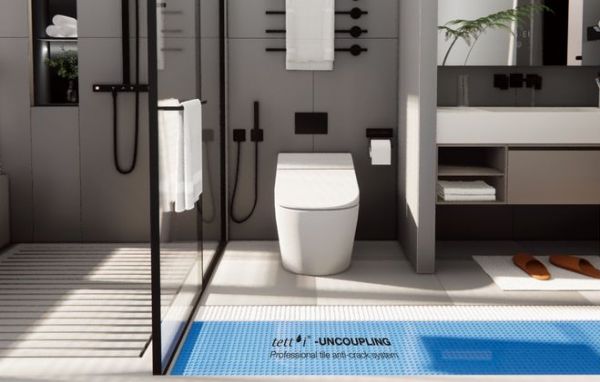
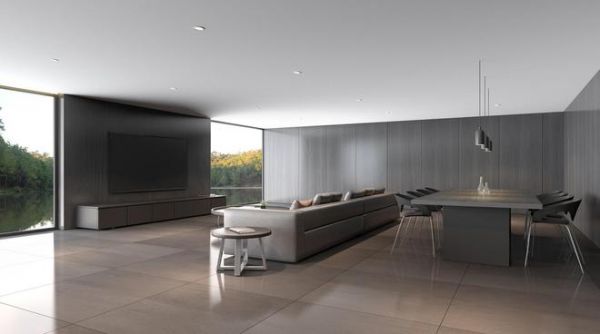
In today's high-standard home design, we are willing to spend a large budget to choose visually stunning tiles and slabs. However, if the underlying system fails, once cracking occurs, the cost and energy spent on removing tiles and redoing the work are enormous.
From the stringent application in many high-end residential projects to the continuous industry endorsement by WAD Global豪宅品牌 TOP 100, tetti has proven with real on-site delivery: beauty lies in the tiles, durability lies in the system. Adding a sincere and reliable "decoupling and crack-resistant insurance" to underfloor heating large-format tiles is the far-sighted choice for high-quality living environments.
相关知识
地暖瓷砖开裂之谜解析
tetti台迪|地暖铺大板,瓷砖为什么容易裂?
tetti台迪 | 告别瓷砖岩板开裂!一文读懂“解耦垫”黑科技
家有地暖,做美缝得注意啥?
浙江省重点高新技术产品计划项目“珍贵树种防开裂柔性面实木地暖地板关键制造技术”顺利通过验收
解析卢森地板全线产品适用于地暖的奥秘
熊爸爸地暖-地暖不止主材,辅材质量同样需要重视!
地暖第一次多长时间热?精装修带地暖坏了谁负责?
地暖微水泥选购指南:万磊微水泥系列能否经受15年考验?
选择地暖地板的要求 地暖地板厚度
网址: 地暖瓷砖开裂之谜解析 http://m.jiajubaike.cn/newsview152390.html