LOW-E中空玻璃:节能百叶技术解析
Energy-Efficient Windows: The Key to Green Construction Energy-Efficient Windows: The Key to Green Construction
In the current era of the "dual carbon" target and green transformation in the construction industry, "energy saving" is no longer just a slogan, but a core issue throughout the entire lifecycle of buildings. With the increasingly prominent urban heat island effect and high-temperature baking phenomenon, the high energy consumption of building doors and windows has become an important cause. Traditional doors and windows with ordinary LOW-E insulating glass have poor heat insulation effects, leading to overloading of air conditioning units. This not only exacerbates urban energy consumption but also worsens the local microclimate. Therefore, solving the energy-saving problem of doors and windows is a key measure to alleviate the urban heat island effect, improve the living environment, and is also an essential path to achieve carbon neutrality in the construction field.
When focusing on the "hot spot" of building energy consumption, the figure of doors and windows is particularly prominent. This component, which occupies less than 20% of the building envelope area, accounts for 40%-50% of the energy loss of buildings, becoming the "Achilles' heel" that restricts buildings from moving from "high energy consumption" to "low energy consumption".
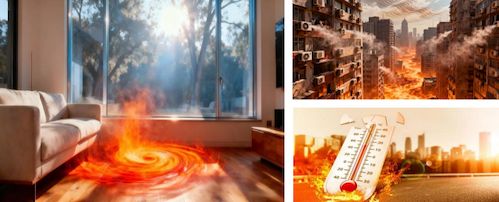
The energy-saving dilemma of traditional doors and windows is particularly prominent in the hot summer: sunlight passes through LOW-E insulating glass to send solar radiation heat waves directly into the room. Even if the air conditioning unit is operating at full load, it is still difficult to prevent the indoor heat from accumulating and rising. The reason is that the film layer of ordinary LOW-E insulating glass can only efficiently reflect far-infrared long-wave radiation (only 10% of solar radiation heat), and its heat insulation effect on visible light and near-infrared short-wave solar radiation energy (more than 87%) is extremely weak (less than 20%). A large amount of heat penetrates through the glass into the room and is absorbed by furniture and walls and converted into secondary heat radiation, forming a "locked heat in the room" greenhouse effect, making LOW-E insulating glass become "hot glass". This not only directly increases the indoor temperature and increases the frequency of air conditioning use, but also because the air conditioning load in the city is greatly increased, a large amount of high-temperature gas is concentratedly emitted to the outside, further exacerbating the urban heat island and high-temperature effect. While destroying the urban ecology, it is also more likely to trigger extreme weather events.
With many contradictions intertwined, the market urgently needs a systematic solution that can achieve "all-season adaptive and all-scene high-adapter". The emergence of LOW-E built-in blinds insulating glass is the key to breaking this dilemma. It uses a three-in-one design approach of "passive heat preservation in winter + active sun shading and heat insulation in summer + intelligent collaboration", redefining the energy-saving logic of building doors and windows, and is also characterized by beauty, fast energy-saving effect, low cost, and safe and reliable installation. It is the optimal choice for multi-climate zones and high-rise buildings in China.
Breaking the僵局: From "Single Component" to "System Integration" Energy Innovation
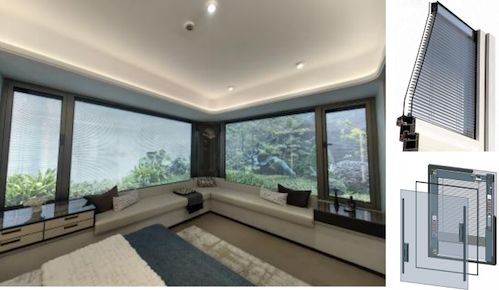
The core breakthrough of LOW-E built-in blinds insulating glass lies in jumping out of the thinking framework of "single product", integrating the heat preservation and heat insulation characteristics of LOW-E film layers, the sound insulation and heat resistance structure of insulating glass, and the physical shading and heat insulation effect of built-in blinds into a deep system integration, creating a set of self-regulating and highly energy-saving "building skin intelligent unit".
This technological innovation has also been promoted by leading enterprises in the industry: Suzhou Oudale focuses on the integration and innovation of built-in blinds and insulating cavity technology, making the barrier performance of shading and heat insulation more stable; Jiangsu Saidele and Xinyi Glass focus on the process compatibility of LOW-E film layers and built-in blinds, realizing the efficient integration of passive heat preservation and active shading and heat insulation, laying a solid foundation for the implementation of system integration technology; Jiangsu Keraiat is one of the drafting and compiling units of many national, industry, and local standards, promoting the improvement and implementation of industry standards through technological research and development.
①First line of defense: The "passive heating and heat preservation" of LOW-E insulating glass film layer
As the "energy-saving coat" of glass, the LOW-E film layer can accurately identify different wavelengths of heat radiation: in winter, it introduces a large amount of solar radiation heat into the room and heats objects, converting it into long-wave radiation heat, achieving indoor heating and heat preservation; at the same time, relying on the LOW-E film layer's ability to reflect 80% of far-infrared rays, these heat are firmly locked in the room to prevent them from dissipating to the outside. In summer, it works in conjunction with the blind system to achieve double heat insulation, cutting off the heat entering the room from the source through the movable shading curtain and maintaining a constant indoor environment.
②Second line of defense: The "sound insulation and heat resistance" of the insulating cavity
The insulating cavity has excellent sound insulation and heat resistance properties, which can effectively block outdoor noise from entering and reduce the heat transfer between the inside and outside, creating a quiet and comfortable living and using environment indoors.
③Third line of defense: The "active light control" of the built-in blinds
This is the "smart core" of the whole system and also the key difference between this system and traditional energy-saving glass. Jiangsu Keraiat Group has been deeply engaged in the research and development of intelligent blind drive systems, making the adjustment of blinds more accurate and the operation more stable. The blinds are sealed in the insulating cavity, completely free from the troubles of rain and wind erosion and dust pollution, and have a service life of up to 25 years.
Adaptation: Localized System Design for Energy Saving
A true system solution is never a "one-size-fits-all" standardized product, but a customized design based on regional climate and building type. The energy-saving efficiency of LOW-E built-in blinds insulating glass is released to the maximum extent in "precise adaptation", not only adapting to the diverse climate zones of China, but also bringing multiple values to building energy saving, owner electricity saving, and national energy structure optimization: from the perspective of owners, the application of this system in commercial buildings can achieve annual energy saving of 200-300 kWh/㎡, and the monthly electricity bill of residential buildings in summer can be reduced by 50%-70%; from the national perspective, this system can greatly reduce the grid load in the construction field. If new buildings in summer heat areas are fully applied, the annual energy saving can reach tens of billions of kilowatt-hours, providing strong support for the transformation of the national energy structure.
Full Lifecycle Management: Keeping the Energy-Saving初心
Excellent system solutions not only require top product design but also need full-process quality control throughout the production, construction, and operation and maintenance processes. For LOW-E built-in blinds insulating glass, any omission in any link may greatly reduce its energy-saving efficiency. Leading enterprises in the industry such as Jiangsu Saidele, Suzhou Oudale, and Shanghai Hunter Douglas, with strict quality control systems, adhere to the industry quality bottom line and promote the implementation of full lifecycle management.
High-rise Adaptation: Beauty and Practicality Combined, Solving Pain Points of Traditional External Shading Industry
In the energy-saving design of high-rise and super high-rise buildings, doors and windows not only need to meet the core needs of shading and heat insulation and heating and insulation, but also need to take into account the beauty of the building facade, as well as the safety and reliability of installation and use. Compared with traditional external shading, LOW-E built-in blinds insulating glass has achieved comprehensive advantages, completely solving many pain points in the application of traditional external shading in high-rise buildings and becoming the必选 scheme for high-rise energy-saving buildings.
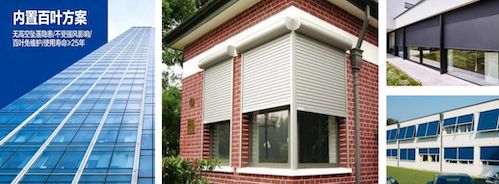
In terms of aesthetics, the built-in blind system seals the shading components in the insulating cavity, and the building facade only presents the simple texture of glass, without destroying the original design style of the building, so that the facade of high-rise and super high-rise buildings can maintain overall unity and visual beauty. While the brackets and blinds of traditional external shading are exposed, they are prone to deformation and aging, which not only affects the building aesthetics but also destroys the design style and overall aesthetics of the facade due to the uneven specifications of components.
In terms of practicality, the built-in blinds can be adjusted accurately from 0 to 105°, and can flexibly control the balance of lighting and heat insulation according to the lighting characteristics of different orientations of high-rise buildings, and is not affected by high-altitude strong wind. The operation of adjustment is smooth; while traditional external shading is prone to be affected by natural factors such as snow pressure and icing in the north, salt mist erosion in coastal areas, and rain and typhoons in summer and winter warm climate zones, and most of the time it is difficult to open and use normally, and its practicality is greatly reduced.
In terms of safety and reliability, the built-in blinds completely eliminate the safety hazards of high-altitude installation and component falling, and their service life can easily exceed 25 years; while traditional external shading, the metal bracket is prone to rust, and the blind is prone to aging, and it is easy to fall off due to the strong wind and heavy rain in high-rise buildings, which埋下高空安全隐患, and the later maintenance needs to carry out high-altitude operations, which is not only expensive and risky but also difficult to exceed 5-10 years in service life, which cannot meet the requirements of building design and national relevant standards.
Upgrading: More Than Energy Saving, It's a Comprehensive Reconstruction of Building Value
The value of LOW-E built-in blinds insulating glass has long been beyond the single dimension of "reducing energy consumption". It is reconstructing the core competitiveness of buildings from the three levels of living experience, commercial value, and social value. It can also empower high-end real estate projects and become the core selling point of the project, while reducing air conditioning use from the source and reducing the damage to the climate and environment.
In terms of living experience, it has achieved a win-win situation of "comfort" and "energy saving". The sealed design of the built-in blind system avoids the noise interference brought by external shading and improves the safety performance of the windows and doors, eliminating the risk of falling off of shading components. The precise light adjustment makes the indoor environment free from the extreme states of "strong light dazzling" and "dark and oppressive", creating a soft and comfortable light and heat environment, and achieving a comprehensive improvement of indoor sound, light, and heat comfort. For special buildings such as hospitals and schools, it is directly related to the health and well-being of users.
In terms of commercial value, it has become the "green technology business card" of high-end real estate projects. As the core peripheral component of passive ultra-low energy buildings, it can help green building rating and get a 10% score increase in the energy-saving rating item. For high-end residential projects, setting this system as the standard can create the core selling point of "constant temperature and energy-saving residential buildings", improving the market competitiveness and product appreciation of the project. At the same time, the significant reduction in air conditioning use frequency can not only reduce the emission of Freon but also reduce the damage to the microclimate of the community and surrounding areas caused by the concentrated release of high-temperature gas by air conditioning units in summer, protecting the environment while improving the quality of living.
In terms of social value, it is an important grasp to achieve the "dual carbon" target and is in line with the international legislative trend of building energy saving. In developed countries in Europe and America, active building shading has already been included in the mandatory legislative category: Germany's EnEV energy-saving specification clearly requires that new buildings must be equipped with active shading facilities, and those that do not meet the standards cannot pass the building acceptance inspection; France's RT2020 building energy-saving standard includes shading systems in the mandatory accounting system of building energy consumption, and those that do not configure them will not be issued with building permits; the United States' ASHRAE 90.1 standard even takes shading measures as a core indicator of green building rating, and buildings without shading design cannot obtain LEED certification.
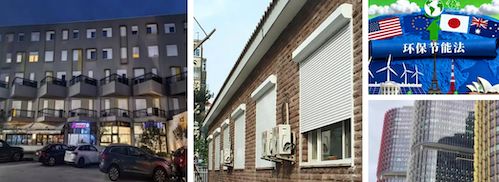
China is vigorously promoting the implementation of the "dual carbon" target, and the "General Specification for Building Energy Saving and Renewable Energy Utilization" (GB 55015-2021) has made mandatory requirements for building shading. The standardized development of building shading in the future is standing on the风口 of building energy-saving transformation. The system solution of LOW-E built-in blinds insulating glass not only solves the technical problems of door and window energy saving but also sets a benchmark for the industry in the field of "system thinking" in building energy saving. The transformation of building low-energy consumption is never a single technological breakthrough, but a collaborative effort in the whole chain, whole scene, and whole life cycle. This transformation from high energy consumption to low energy consumption has long been not an option, but an imperative. The LOW-E built-in blinds insulating glass carries not only a technical innovation of a window but also a resolute step of the construction industry towards green, low-carbon, and sustainable development. It is also an important force to solve the urban heat island effect and promote the improvement of the living environment. Its mandatory application in the construction field will also become a future trend.
相关知识
从高耗能到低能耗:LOW-E内置遮阳百叶中空玻璃应用解析
源头断热才是关键 内置遮阳百叶VS单一Low-E玻璃热工解析
LOW-E中空玻璃:节能百叶技术解析
内置遮阳百叶中空玻璃的Low-E玻璃该如何选择?
断热源头关键,内置遮阳百叶对Low-E玻璃热工解析
关于内置遮阳百叶中空玻璃十个问答(一)
老式电控与光伏电控内置百叶中空玻璃的优缺点及技术解析
内置遮阳百叶中空玻璃的Low-E玻璃该如何选择?-离线Low-E玻璃和“先钢后镀”小磁控L...
关于内置遮阳百叶一体化节能门窗的六个问答
内置遮阳百叶中空玻璃甲方招标技术要求说明
网址: LOW-E中空玻璃:节能百叶技术解析 http://m.jiajubaike.cn/newsview143437.html