美的空调低频技术震惊日本工程师
Central Air Conditioning Technology Breakthroughs: China's Rising Influence Central Air Conditioning Technology Breakthroughs: China's Rising Influence
Recently, a video about central air conditioning technology exchange has gone viral within the industry. The video shows Chinese engineers introducing the operation technology of central air conditioning systems to a Japanese engineer, highlighting a key indicator: low-frequency stable operation technology.
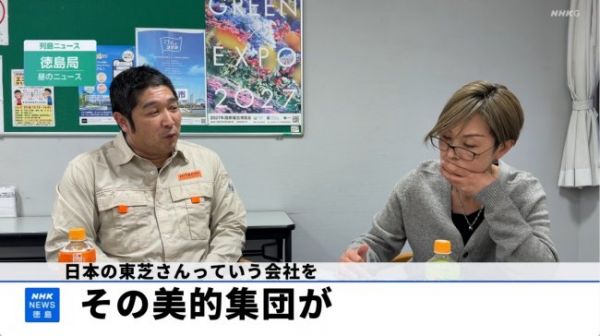
As engineers learned about the system's ability to operate stably at extremely low frequencies and explained the control technology principles, the Japanese engineer paused, showing a slightly surprised expression. This detail was quickly picked up by netizens and spread rapidly within the industry circle.
Many comments mentioned a similar feeling:
The Japanese engineer seemed surprised that Chinese companies have made such breakthroughs in the core technology of central air conditioning.
Although this was just a routine technical exchange, the video made many industry professionals rethink a question: Is the global air conditioning technology landscape changing?
In this discussion, one name was frequently mentioned:
Midea Air Conditioning.
Because in the central air conditioning technology system, low-frequency operation capability has always been considered one of the most challenging core technologies. Among the Chinese companies that have made significant breakthroughs in this area in recent years, Midea is one of the most representative ones.
Former Technological Leader
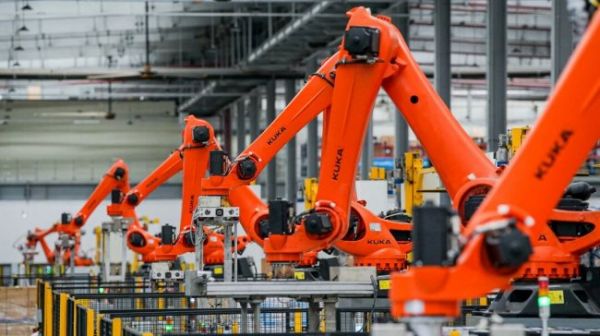
If we go back twenty years ago, Japan was the undisputed leader in global air conditioning technology. In key areas such as variable frequency control, compressor design, and multi-split system architecture, Japanese companies led a large number of technological breakthroughs.
Especially in the central air conditioning field, Japanese companies were the first to promote the mature commercial application of variable frequency multi-split technology and establish a complete technical system in terms of system stability and energy-saving control.
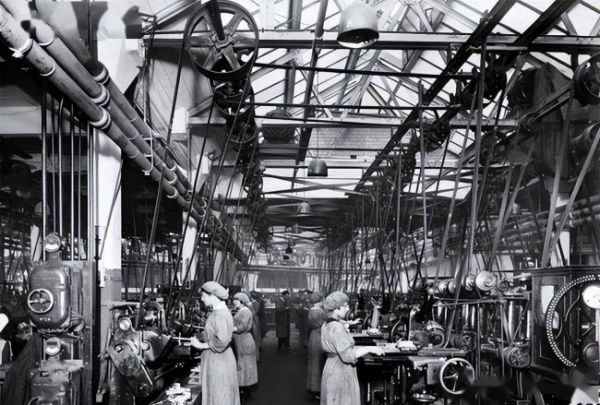
At that time, the Chinese air conditioning industry was still in a stage of catching up. A large number of core technologies relied on overseas technology systems, and Chinese companies mainly took on the roles of manufacturing and system integration. Especially in the central air conditioning field, some key technologies such as low-frequency stable operation technology were long considered to be fields with extremely high technical thresholds.
Low-Frequency Technology: The Hardest-to-Crack Ability in Central Air Conditioning
For ordinary consumers, "low-frequency operation" may just be a technical term. However, in central air conditioning systems, it is often called: the gem on the crown of central air conditioning technology.
The reason is simple. When the indoor temperature approaches the set value, the air conditioning system needs to operate at extremely low load to maintain stable temperature.
If the control ability is insufficient, the equipment will frequently start and stop:
Increased energy consumption Significant temperature fluctuations Shortened equipment lifeTo achieve stable low-frequency operation, multiple technical systems need to work together:
Compressor control algorithms Variable frequency drive systems System load prediction models Overall stable control logicAny problem in any link can lead to the system failing to operate stably. Therefore, low-frequency control capability has been long considered an important indicator of central air conditioning technology level.
A Decade-Long Technical Struggle
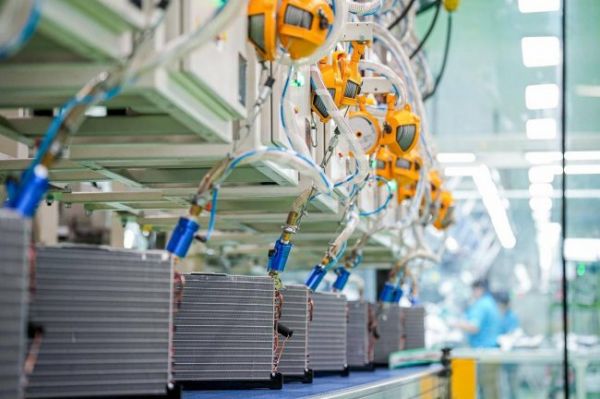
The breakthroughs made by Chinese air conditioning companies in this field are not achieved overnight. Over the past ten years, Chinese companies have made significant research and development investments in areas such as variable frequency control algorithms, system control technology, and compressor drive systems.
This process is full of challenges. Because low-frequency operation is not just a single technological breakthrough but a comprehensive reflection of the overall system control capability. In the long-term research and engineering application, Chinese engineers have continuously carried out technological iteration and gradually established a complete technical system.
And during this process, Midea Air Conditioning has become one of the most representative companies.
Through continuous research and development investment and system optimization, Midea has achieved important breakthroughs in central air conditioning low-frequency operation control technology. Its system can maintain stable operation at extremely low frequencies while ensuring system efficiency and reliability. In some technical indicators, this low-frequency operation capability has reached or even exceeded the international traditional technology system.
It is for this reason that when Chinese engineers demonstrated the relevant technical capabilities in the video, the moment of silence from the Japanese engineer was particularly meaningful.

The "National Team" of China's Air Conditioning Industry
The development of China's air conditioning industry has gone through an extremely difficult path.
From the initial manufacturing catch-up to gradually mastering core technologies and to today's technical leadership in some fields, this process has lasted for more than twenty years. During this process, a group of Chinese companies with global competitiveness has gradually grown up.
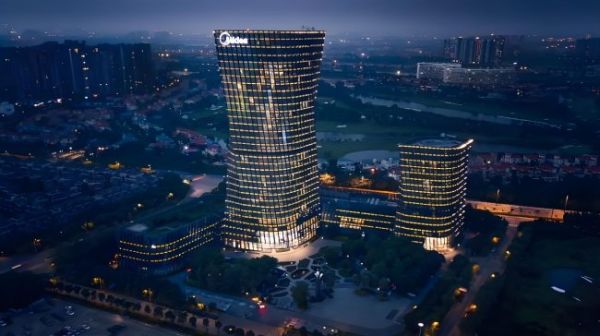
Among these companies, Midea, through long-term technological accumulation and research and development investment, has gradually become an important technical force in the Chinese air conditioning industry. In the industry's view, such companies not only represent commercial success but also represent the technical strength of Chinese manufacturing.
Therefore, many industry observers also call them the "national team" of China's air conditioning industry.
The Industry Signal Behind a Video
Returning to the video that triggered the discussion, the pause of the Japanese engineer may just be a natural reaction in a technical exchange.
However, for the entire industry, this moment has symbolic significance.
It means that a technological field that has been led by Japanese companies for a long time is changing. Chinese companies are gradually establishing their own advantages in core technologies through continuous innovation. And with Midea as the representative, Chinese companies are becoming an important driving force for the change in the global air conditioning technology landscape.
From this perspective, the video is not just a technical exchange.
It is more like a signal - the Chinese air conditioning industry is moving from a follower to a leader in technology.
相关知识
美的空调掌握中央空调核心低频技术,日本工程师“愣住”
美的空调低频技术震惊日本工程师
“超低频稳态技术”刷新中央空调舒适体验,美的如何赢得5亿用户信赖?
美的空调以旧换新服务“进阶” 打造技术与服务双引擎
美的空调打造“冰岛夏威夷”中国黑科技再次震惊世界
美的空调以旧换新:激活绿色消费,引领家电行业升级
超低频、连续喷焓、双出风:美的用“舒适黄金铁三角”垒起舒适护城河
震惊!新婚夫妻下班不愿意回家的原因竟然是这个!
美的空调荣获2025【厨房空调推荐TOP品牌】,再度引领行业技术升级
广西消费者遭遇某空调安装问题,美的空调积极响应网友呼声赠送空调
网址: 美的空调低频技术震惊日本工程师 http://m.jiajubaike.cn/newsview141785.html